
Key Takeaways
- Autonomous brand extraction separates modern platforms from template builders: Flint automatically captures your complete design system from a single URL, including animations and interactive elements, while traditional builders require manual recreation of brand guidelines
- Speed to market varies dramatically across platforms: Flint delivers production-ready pages in minutes, while visual builders like Webflow require hours of design work and enterprise platforms need weeks of implementation
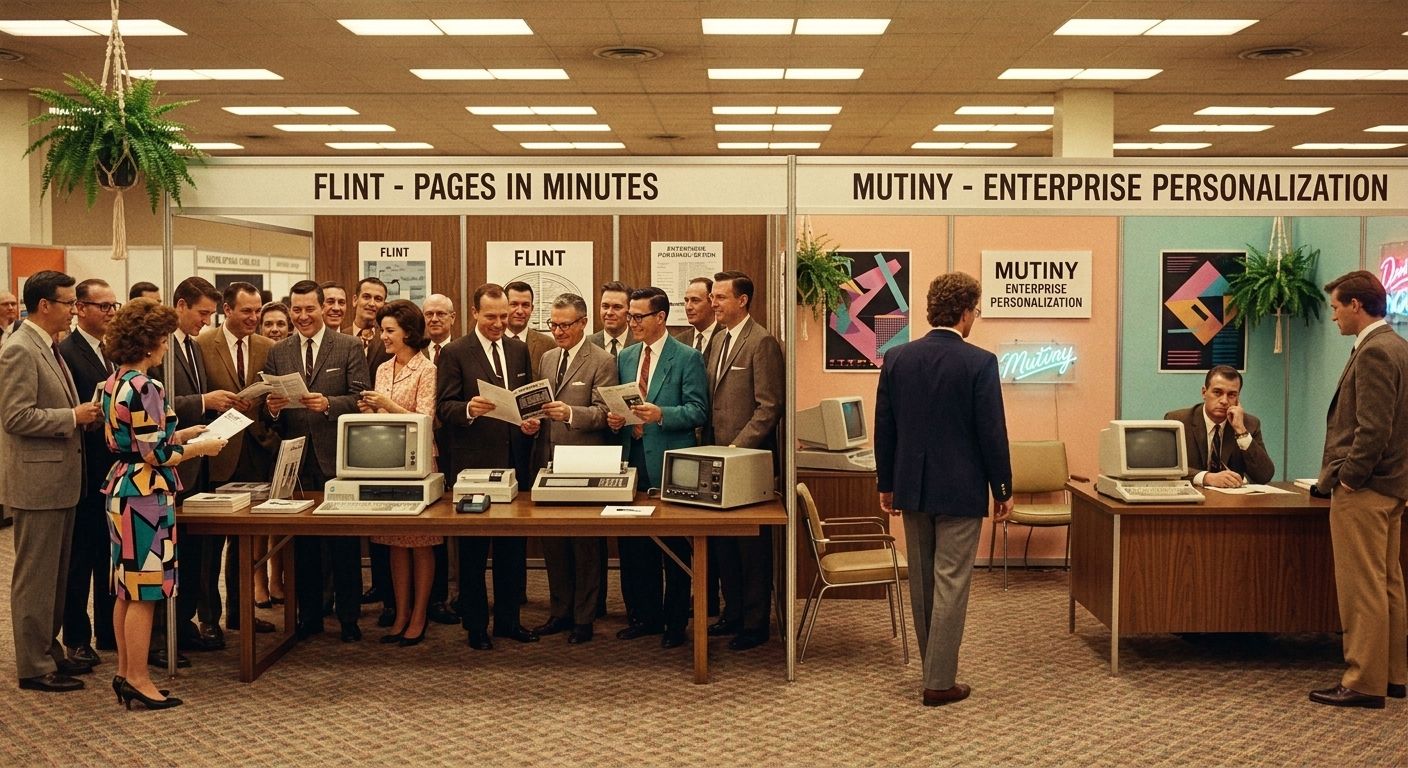
- Multi-use case flexibility determines long-term value: Flint handles SEO, ABM, ad landing pages, product pages, and event pages in one platform, while Mutiny focuses primarily on sales-oriented assets and ABM microsites
- Programmatic scale enables campaign execution at volume: Flint creates hundreds of pages from Claude, CSV files, or data sources like Clay, whereas most alternatives require manual one-by-one page creation
The landing page and marketing asset creation market has expanded to serve diverse needs, from solo marketers launching ad campaigns to enterprise teams running sophisticated ABM programs. Each platform in this guide targets specific use cases and team sizes, making the right choice dependent on your primary marketing objectives.
1. Flint: Autonomous Landing Pages with True Brand Extraction
Flint stands as the only autonomous web platform that generates production-ready landing pages. The pages match your brand as Flint automatically extracts your complete brand system from your existing website. This approach eliminates the gap between speed and quality that forces teams to choose between fast DIY tools or expensive agency work.
Key Features:
- Proprietary brand extraction capturing design tokens, components, typography, spacing, colors, and interactive elements from a single homepage URL
- Flint MCP integration connecting with Claude, Codex, and other agents for orchestrating hundreds of pages from data sources
- Flint API integration connecting with Zapier, Airtable, Clay, Relay, for programmatic page generation
- Direct editing through click-and-type interfaces without requiring code knowledge
- Production-ready SEO infrastructure including server-side rendering, semantic HTML, and llms.txt for AI answer engine optimization
- Automatic migration of existing analytics scripts, with support for Google Tag Manager, Segment, Google Analytics, and other custom tracking scripts
Pricing Structure:
- 14-day free Pro trial with no credit card required
- Starter and Pro plans with transparent self-serve pricing
- 20% annual billing discount
- Enterprise tier with custom pricing
Customer Results:
Flint's customer outcomes demonstrate material business impact. Graphite achieved 50% CAC reduction and influenced seven figures of ARR through Flint-built ad pages. 11x reported 3x conversion rate increases and thousands of leads captured.
The platform particularly excels for teams needing ad landing pages, SEO content, and ABM pages from a single solution. Amigo.ai created 341 pages in five minutes using Flint's programmatic generation from a Clay table.
2. Unbounce
Unbounce has served the landing page market since 2009, building a reputation for conversion-focused tools and AI-powered traffic routing that optimizes page performance automatically.
Key Features:
- Drag-and-drop builder with templates for rapid page creation
- AI copywriting assistance for headline and body text generation
- A/B testing capabilities built into the platform
- Integration with most major CRM and marketing automation tools
- Smart Traffic AI routing visitors to best-performing page variants
Unbounce works well for marketing teams focused on paid acquisition campaigns where conversion rate optimization takes priority. The Smart Traffic feature automatically learns which page variants perform best for different audience segments, reducing manual testing overhead.
The platform uses template-based design rather than brand extraction, meaning pages start from pre-built layouts rather than matching your existing website design system.
3. Instapage
Instapage targets enterprise marketing teams running complex multi-channel campaigns, offering advanced features for connecting advertising platforms directly to landing page experiences.
Key Features:
- AdMap providing visual campaign-to-page mapping for tracking ad group performance
- 120+ marketing integrations including major CRM and analytics platforms
- Advanced A/B testing with statistical significance calculations
- Collaboration features for enterprise team workflows
- Responsive design tools for mobile optimization
Instapage's AdMap functionality proves particularly valuable for teams managing large Google Ads or Meta campaigns where matching ad creative to landing page messaging impacts quality scores and conversion rates.
4. Webflow
Webflow provides a visual development environment that gives designers and developers precise control over website creation, serving as a full CMS and hosting platform.
Key Features:
- Visual canvas with direct CSS manipulation for pixel-level control
- Full CMS capabilities for content management
- Hosting infrastructure with global CDN
- E-commerce functionality for product pages
- Extensive template marketplace and community resources
Webflow excels when design teams need complete creative control and have the technical skills to leverage the platform's capabilities. The learning curve is steeper than template-based builders, often requiring dedicated Webflow specialists or agency engagements.
For teams prioritizing speed over design control, Flint's autonomous approach delivers pages in minutes versus the hours or days typical for Webflow projects. See the full Flint comparison for detailed differences.
5. Framer
Framer combines design tools with publishing capabilities, targeting designers who want to create interactive web experiences without traditional development workflows.
Key Features:
- Interactive animations and micro-interactions
- Component-based design system support
- Built-in hosting and analytics
- Collaboration tools for design teams
Framer positions itself between pure design tools like Figma and full website builders like Webflow. The platform works well for design-led teams creating portfolio sites, product marketing pages, or interactive experiences where visual polish matters most.
Marketing teams without dedicated designers may find Framer's design-first approach requires more creative resources than autonomous platforms like Flint. The Flint vs Framer comparison details the tradeoffs between design control and autonomous generation.
6. HubSpot
HubSpot offers landing page creation as part of its comprehensive marketing, sales, and CRM platform, providing integrated tools for companies already using the HubSpot ecosystem.
Key Features:
- Native integration with HubSpot CRM and marketing automation
- Form builder with lead capture and routing
- Email marketing coordination with landing pages
- Analytics unified across marketing channels
- A/B testing within the platform
HubSpot's landing page builder serves teams already invested in the HubSpot ecosystem where integration value outweighs standalone landing page capabilities. The platform works well for lead generation campaigns where form submissions flow directly into CRM workflows.
Teams needing landing pages for use cases beyond lead capture, such as SEO content or product pages, may find HubSpot's templates limiting compared to purpose-built landing page platforms.
7. RightMessage
RightMessage provides website content adaptation at an accessible price point, targeting small businesses and solo marketers who need basic content customization without enterprise budgets.
Key Features:
- Bidirectional ESP sync for email subscriber data
- Content rules based on visitor attributes
- JavaScript-based implementation
- Integration with major email marketing platforms
RightMessage serves teams seeking basic content adaptation capabilities at SMB-friendly pricing. The platform works particularly well when the primary use case involves adapting existing website content based on email subscriber segments.
Understanding Mutiny's Core Offering
Mutiny positions itself as an AI agent for GTM teams that creates customer-facing assets quickly and on-brand. What Mutiny Does:
- Ingests company websites to build brand profiles including logos, colors, fonts, and visual guidelines
- Creates buyer-facing assets including landing pages, ABM microsites, deal rooms, proposals, and sales collateral
- Supports both one-to-many and one-to-one content creation workflows
- Provides AI-assisted research for content generation
Want to see how Flint compares in practice? Start for free and launch your first branded landing page in minutes.
Frequently Asked Questions
What are the main reasons businesses look for alternatives to Mutiny?
Teams seek Mutiny alternatives when they need landing pages for multiple use cases beyond ABM and sales enablement. Mutiny excels at creating sales-oriented assets like deal rooms and account microsites, but marketing teams often need platforms that also handle SEO pages, ad landing pages, event pages, and product marketing content. Budget considerations also drive exploration, as Mutiny's enterprise pricing may exceed available marketing technology budgets for mid-market companies.
How do AI-powered landing page platforms like Flint compare to traditional website builders?
AI-powered platforms like Flint extract your brand system from your existing website and generate production-ready pages in minutes. Traditional builders like Webflow and Framer require manual design work, often taking hours or days per page and demanding design expertise or agency support. Flint's approach eliminates the tradeoff between speed and brand consistency that traditional builders impose, delivering pages that match your design system without manual recreation.
Can Mutiny alternatives effectively support both ABM and general marketing campaigns?
Flint supports multiple use cases including ABM pages, ad landing pages, SEO content, product pages, and event pages from a single platform. This multi-use case flexibility means marketing teams can consolidate tools rather than maintaining separate solutions for different campaign types. Mutiny is strongest for teams who only need to create sales assets, including landing pages, deal rooms, proposals, and campaign-specific content.
What are the key considerations when choosing an alternative to Mutiny for speed and brand consistency?
Evaluate whether platforms extract your brand system automatically or require manual template customization. Flint's proprietary brand extraction captures your complete design system from a single URL, including animations and interactive elements, producing pages that appear hand-crafted by your design team. Consider time-to-first-page as well, as this ranges from minutes with autonomous platforms to weeks with enterprise solutions requiring implementation support.
How do options like Flint integrate with existing marketing stacks and analytics tools?
Flint automatically migrates existing analytics scripts from your website, supporting Google Tag Manager, Segment, Google Analytics, HubSpot, and Salesforce without additional configuration. The Flint MCP integration connects with Claude for page creation through natural conversation, while the API enables programmatic generation from workflow tools like Clay, Relay.app, and Zapier. This flexibility allows teams to maintain their existing technology stack while adding autonomous page generation capabilities.
What kind of ROI can I expect from transitioning to a more autonomous landing page solution?
Flint customers report measurable business outcomes including 50% CAC reduction at Graphite and 3x conversion rate increases at 11x. LangChain generated six figures in pipeline and built 17 landing pages in under two hours. Tandem tripled conversions while saving 70 hours of manual website work. These outcomes reflect both direct conversion improvements and operational efficiency gains from faster page deployment.